Technology Insights
What Is DWR Treatment?
Learn how DWR treatment helps fabrics repel surface water, reduce wetting out and support waterproof breathable textile performance for outdoor apparel and gear.
Definition
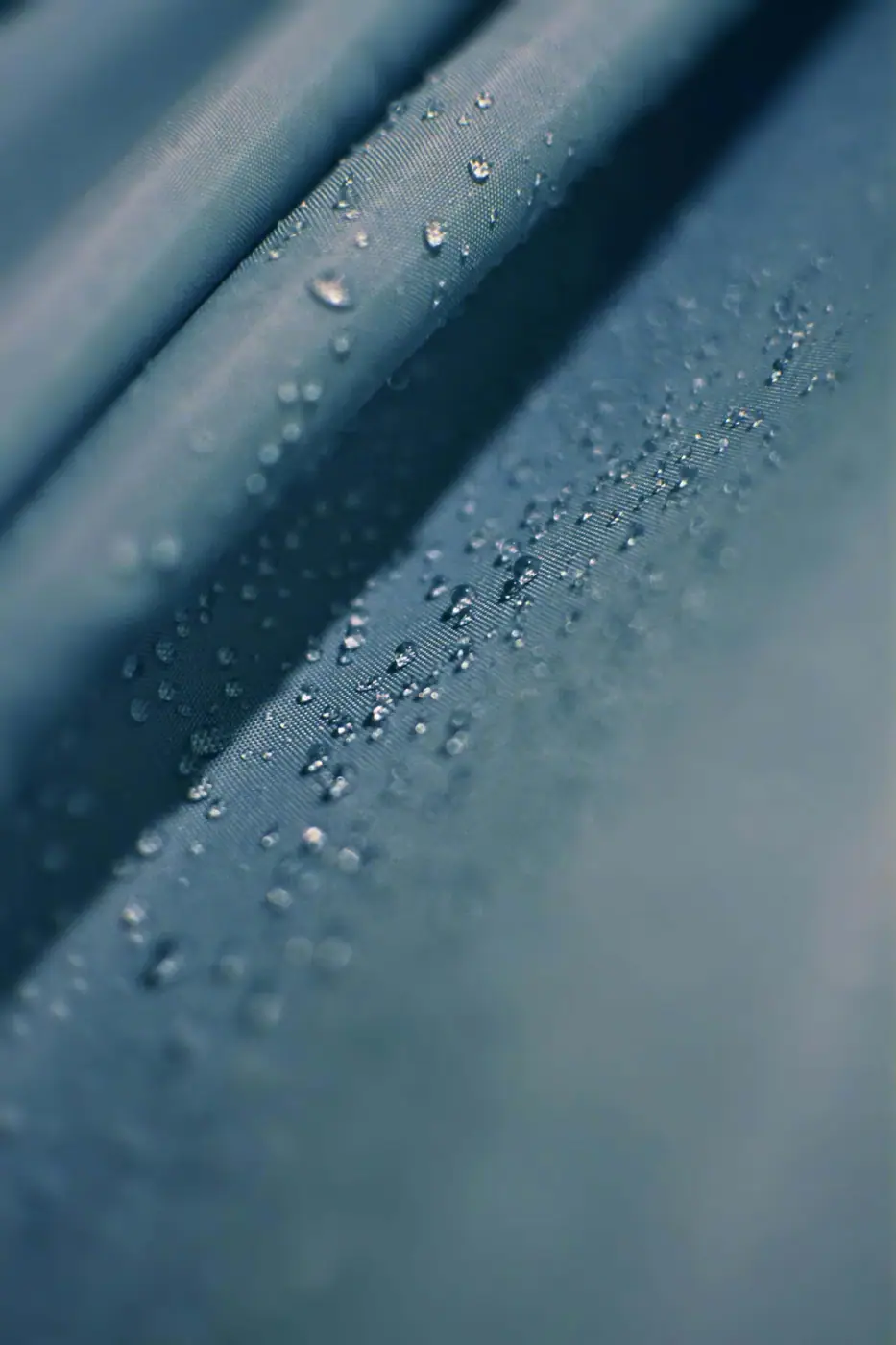
DWR, or Durable Water Repellent treatment, is a surface finish applied to textiles so water beads up and rolls off instead of immediately soaking into the fabric. This hydrophobic finish helps reduce water absorption, supports faster drying and helps prevent outer fabric saturation.
DWR is especially important for waterproof fabrics and breathable outdoor shells because it helps reduce “wetting out.” When face fabrics become saturated, moisture vapor transmission can drop sharply even if the internal membrane is still waterproof. For this reason, DWR is often used together with membranes, coatings and lamination systems within modern waterproof technology.
Historically, many high-performance DWR finishes used long-chain fluorochemicals. Modern textile development increasingly uses shorter-chain fluorocarbon systems or fluorine-free alternatives in response to environmental and regulatory concerns.
How DWR Treatment Works
DWR treatment modifies the surface energy of textile fibers. A lower surface energy makes it harder for water to spread across the fabric surface, so droplets form beads and can roll away more easily.
Common Application Methods
- Pad-dry-cure: Fabric is immersed in a DWR solution, squeezed to remove excess liquid, dried and heat-cured.
- Spray application: DWR chemistry is sprayed onto the fabric surface and then dried or cured.
- Foam application: DWR is applied as foam to reduce liquor use and improve controlled placement.
- Exhaust method: Fabric is treated in a closed vessel with a DWR bath.
Chemical Mechanism
- Surface modification: DWR molecules bond or associate with fabric fibers.
- Hydrophobic barrier: A low-surface-energy surface is created.
- Water beading: Surface tension causes water to form rounded droplets.
- Roll-off effect: Gravity and fabric movement help water beads slide away.
DWR Chemistry
- Fluorocarbon DWR: Fluorinated chemistry provides strong water repellency and, in some systems, oil repellency.
- Hydrocarbon DWR: Carbon-hydrogen chemistry supports water repellency without fluorine.
- Silicone DWR: Polysiloxane chemistry offers another fluorine-free water-repellent route.
- Bio-based DWR: Emerging options use renewable feedstocks, though performance varies by formulation.
The goal is to create water repellency while preserving air permeability, fabric hand feel and garment comfort.
Key Specifications
| Property | Typical Value |
|---|---|
| Application Weight | 0.5-2.0% of fabric weight |
| Water Contact Angle | 100-150° for treated surfaces |
| Spray Test Rating | 80-100 depending on chemistry and durability |
| Wash Durability | About 20-80+ washes depending on type |
| Curing Temperature | Often 150-180°C |
| Breathability Impact | Usually low when correctly applied |
| Abrasion Resistance | Fair to good depending on fabric and chemistry |
These figures are general reference ranges. Buyers should confirm the test method, wash protocol and target performance before production. Common evaluations include ISO 4920 and AATCC spray testing, often alongside broader fabric testing.
Types of DWR Treatment
C8 Fluorocarbon DWR
- Long-chain legacy PFAS chemistry
- Historically strong water and oil repellency
- High durability in older systems
- Environmental persistence and bioaccumulation concerns
- Largely phased out across responsible textile programs
C6 Fluorocarbon DWR
- Shorter-chain fluorocarbon chemistry
- Strong water repellency
- Reduced bioaccumulation concerns compared with C8
- Still contains fluorine
- Used where high repellency is required
C0 Fluorine-Free DWR
- Hydrocarbon, silicone or other non-fluorinated chemistries
- Good water repellency
- No intentionally added PFAS
- Preferred by many sustainability-focused brands
- Often lower oil repellency and sometimes lower wash durability
Wax-Based DWR
- Paraffin or natural wax treatment
- Traditional and often repairable approach
- Requires more frequent reapplication
- Can change fabric hand feel
- Common in heritage outdoor gear
Silicone-Based DWR
- Polysiloxane chemistry
- Soft hand feel
- Good water repellency
- Often used in fluorine-free formulations
- Useful for selected apparel and gear applications
Bio-Based DWR
- Derived from plant oils, sugars or other renewable feedstocks
- Emerging sustainable direction
- Performance depends strongly on chemistry and substrate
- Often higher cost or limited availability
Hybrid DWR
- Combines multiple chemical approaches
- Designed to balance repellency, durability and environmental expectations
- Often proprietary to finish suppliers
- Used for mid-tier or application-specific solutions
Advantages
- Water beading: Helps water roll off the surface.
- Reduced saturation: Helps prevent face fabric wetting out.
- Faster drying: Less absorbed water can mean faster dry time.
- Breathability support: Helps waterproof breathable systems perform as intended.
- Low added weight: DWR adds minimal mass compared with membranes or coatings.
- Soft hand feel: Proper treatment usually preserves fabric drape.
- Easy maintenance: Some DWR performance can be refreshed or reapplied.
- Wide use: Applicable to outdoor apparel, bags, tents, footwear and workwear.
Limitations
- Not waterproof by itself: DWR is a surface repellency treatment, not a continuous waterproof barrier.
- Performance wears down: Washing, abrasion, dirt and oils reduce repellency.
- Maintenance required: Outdoor products may need cleaning, heat activation or reapplication.
- Environmental concerns: Fluorinated DWR chemistries are under increasing scrutiny.
- C0 trade-offs: Fluorine-free options may provide lower oil repellency or lower wash durability.
- Contamination sensitivity: Body oils, detergent residue and fabric softener can reduce beading.
- Heat dependence: Some finishes require heat curing or heat reactivation.
Applications
Outdoor Apparel
- Waterproof jackets and pants
- Softshell and hardshell outerwear
- Down jackets and insulated gear
- Hiking pants and shorts
- Gloves, hats and gaiters
Outdoor apparel programs can combine DWR with TPU laminated fabrics or other membrane systems depending on waterproof rating, breathability and hand-feel requirements.
Outdoor Equipment
- Tents and tarps
- Backpacks and duffel bags
- Sleeping bags
- Hammocks and camping gear
- Boat covers and sails
Explore application planning on our bags and backpacks solution page.
Footwear
- Hiking boots
- Trail running shoes
- Work boots
- Casual outdoor footwear
- Waterproof socks and gaiters
Workwear and Uniforms
- Industrial workwear
- Emergency service uniforms
- Military field uniforms
- Healthcare protective gear
- Weather-resistant safety apparel
Home and Automotive Textiles
- Upholstery fabrics
- Outdoor cushions
- Umbrellas and awnings
- Convertible tops
- Seat covers and interior trim fabrics
DWR Performance Ratings
| Spray Rating | Description | Water Repellency |
|---|---|---|
| 0-50 | Poor | Significant wetting |
| 60-70 | Fair | Partial wetting |
| 80-90 | Good | Slight surface wetting |
| 90-100 | Excellent | Strong beading and minimal wetting |
Spray ratings are useful for surface wetting assessment, but they do not replace hydrostatic pressure testing for waterproof barrier performance.
DWR Types Compared
| Feature | C8 PFAS | C6 PFAS | C0 Fluorine-Free |
|---|---|---|---|
| Water Repellency | Excellent | Very good | Good |
| Oil Repellency | Excellent | Good | Limited |
| Wash Durability | High | Moderate to high | Moderate |
| Environmental Concern | High | Moderate | Lower |
| Bioaccumulation Concern | High | Lower than C8 | No PFAS bioaccumulation concern |
| Market Status | Phased out in many programs | Still used in selected performance products | Growing adoption |
| Typical Use | Legacy products | High-performance outdoor gear | Sustainable brand programs |
FAQs
What does DWR stand for?
DWR stands for Durable Water Repellent. It is a textile treatment designed to make water bead on the fabric surface instead of spreading and soaking in immediately.
Is DWR the same as waterproof?
No. DWR is water-repellent, not waterproof. Waterproof fabrics use membranes, coatings or laminates to block water penetration. Many outdoor fabrics use both a waterproof barrier and DWR surface treatment.
How long does DWR last?
DWR durability depends on chemistry, fabric construction, abrasion, washing, dirt and body oils. Some finishes last many wash cycles, while field performance may decline sooner under heavy use.
Can DWR be reapplied at home?
Yes. Many outdoor garments can be treated with spray-on or wash-in DWR products after cleaning. The correct method depends on garment construction and care-label guidance.
How do you reactivate DWR?
Some DWR finishes can be temporarily improved with low heat after washing, such as tumble drying on low or careful ironing with a pressing cloth. Always follow the garment care label.
Why is DWR not working?
Common reasons include dirt, body oils, detergent residue, abrasion, lack of heat activation or exhausted finish chemistry. Cleaning the garment and reapplying DWR may restore water beading.
Is DWR harmful to the environment?
Environmental impact depends on the chemistry. Long-chain fluorinated DWR systems raised major PFAS concerns. Many brands now prefer C6 or fluorine-free alternatives, with increasing movement toward PFAS-free programs.
What is the difference between DWR and waterproof coating?
DWR is a thin surface treatment that encourages water beading. A waterproof coating or membrane is a continuous barrier designed to stop water penetration. DWR helps the outer fabric shed water, while the barrier provides waterproof protection.
Does DWR affect breathability?
Properly applied DWR usually has limited impact on air permeability and can improve effective breathable comfort by reducing outer fabric saturation. Wetting out can block vapor movement even when the membrane itself remains functional.
Can fabric softener be used on DWR-treated fabrics?
No. Fabric softener can leave residue that reduces water beading and interferes with breathable textile performance. Technical detergents made for outdoor gear are usually preferred.
References
- AATCC Test Method 22, Water Repellency: Spray Test
- ISO 4920, Textiles: Determination of Resistance to Surface Wetting
- Stockholm Convention on Persistent Organic Pollutants
- EPA guidance on PFAS regulation and management
- European Chemicals Agency, PFAS restriction information
- Textile Research Journal, DWR performance studies
- Outdoor Industry Association, fluorochemical management resources
- Bluesign chemical management standards
Fabric FAQ
Common Functional Fabric Questions
How do functional fabrics improve outdoor performance?
Functional fabrics combine waterproof protection, breathability, lightweight construction and durability to improve comfort and performance in demanding outdoor environments. They are widely used across outdoor apparel, travel gear and high-performance equipment.
Why are lightweight fabrics becoming more popular?
Lightweight fabrics improve mobility, reduce fatigue and increase comfort during outdoor activity, travel and sportswear use. Modern lightweight fabric engineering helps brands reduce weight while maintaining durability and weather protection.
How are modern outdoor fabrics different from traditional textiles?
Modern outdoor fabrics integrate advanced membrane technology, technical weaving systems, moisture-management engineering and sustainable material innovation. Unlike traditional textiles, they are developed around measurable performance needs and application-specific testing.
Are sustainable fabrics suitable for technical applications?
Yes. Modern sustainable fabrics can provide strong durability, waterproof performance and breathable comfort for outdoor and sportswear applications when fiber quality, construction and finishing are properly engineered.
Which industries use functional fabrics?
Technical fabrics are widely used in outdoor apparel, activewear, tactical gear, travel products, industrial textiles and high-performance equipment manufacturing. NexTex Lab organizes these needs through dedicated fabric solution pages.